Pages

Monday, January 31, 2011

Fictional Slang

Lately I've been thinking a lot about period appropriate language, especially in the context of world-building. Tolkien created entire languages for Middle Earth. Though fantasy worlds probably don't have to be that fleshed out, it's true that a bunch of trolls probably wouldn't sit around talking like 21st century Americans. Sci-fi novels often do an excellent job of finding new terms. A Clockwork Orange springs to mind. You can see the author's world through the character's voice. Horror can lie beneath words we aren't even familiar with.

Swear words are often short, hard, and abrupt. They sound like coughing and can be easily spit out. That's one thing I liked about Graceling. When the lead character is upset she might burst out with a word like "rocks". It's a simple word and one we don't ascribe much menace to, but it does have that staccato violence swear words require. A soft start and a hard finish. More than that, it tells us that the speaker is from an extremely naturalistic world. She doesn't invoke the name of a deity when she's upset. It's an extremely smart choice on the part of the author.

Technologically advanced worlds are rife with buzzwords and abbreviations. Efficient and trendy.

Dystopias have language that is often wry and subversive. I love them for this. There's a reason we still use the term "Big Brother". So chilling and effective.

I'm doing some brainstorming on my next novel, which will be more sci-fi and I'm finding that focusing on creating languages for each of the characters is giving me a lot of insight into who they are and how they see the world. What do they invoke when they are mad? Do they use quick slang, or drawn-out soliloquies? What are the nicknames they give to the things around them? What elements in their lives would lead them to name the world that way? How does all of this seem natural and not showy?

All too often, slang can ring hollow. "Fetch" really isn't going to happen.

I've done some research on slang from different eras to help with my process. Well, one thing that I learned was that people don't really make up terminology for boring things. Usually it is for something annoying or something sexual. Or, alcohol. There have been a lot of different ways to describe getting drunk. Lots and lots and lots. Lots of names for women, which makes me wonder if in the past it was men driving the slang. Or, nobody bothered to record what the women were calling the men. Terms that stick around are usually a little sly. In the Victorian Age men referred to women by commenting on their monetary value. Not so far off from today, when we "shake our money makers".

There isn't really a big point to this post. Just a few of the things I've been thinking about lately. There's something fascinating about slang and the way that it evolves. I love looking at what it says about the things we value and the things we despise. I'm impressed by the creativity of it. I love when authors can come up with authentic terminology for their worlds.

What catch-phrases, labels, terms, and slang have been especially effective to you? In your reading and otherwise? What do you think makes a fictional lexicon work?


Edit: Here's a great post on dialects by the fabulous Juliette Wade. TalkToYoUniverse

Wednesday, January 26, 2011

When Writing Is An Act Of Rebellion

Sure, most of us write because we're in love with stories. They fill us up and the only way we can find peace is to release them into the world.

But, sometimes the act of creation is an expression of rebellion. A way of saying to the world, "Fine! You're going to be that way? Well, you can just suck it! I'm going to make my own world!" Then, huddle up in the corner with a pack of crayons and a petulant look on your face.

Maybe creation is a rebellion is against the expectations that life has for you. You're supposed to be normal. Responsible. Do something with a guarantee. You're supposed to expect boredom to follow you around. Progress quietly and respectably, follow the guidelines and never tell anyone what you really think or feel. Keep yourself to yourself. Someone always knows better than you. Someone else wrote the rules. The best you can do is play the game.

Maybe the rebellion is against the expectations other people have for you. The judgement in their eyes when they hear you want to do anything impossible. The sneer when you insist on finding out for yourself. Their expectation that you will fail.

Sometimes love doesn't sustain us. Passion doesn't inspire us. Things grow stale. The page is blank, the studio is empty and nothing is blooming.

I think in these times it is perfectly acceptable to fall back on rebellion. Why am I going to do this? Because someone thinks I can't. Maybe that someone is me. Maybe that someone is the whole, entire world. Either way, screw you!


What about you? What keeps you working when mere love of the work isn't enough?

(For some the act of writing carries more danger. The stifling of free speech and the silencing of dissenting voices is common practice around the world. Many have been imprisoned for expressing their beliefs. I argue that in these cases writing is not only an act of rebellion, but one of extreme courage. Thank you to those brave enough to let their voices be heard.)

Monday, January 24, 2011

The First Stories

They are the first stories we hear. Sometimes before we have the language to discern what is being said. They come at the end of a celebration or shared meal when everyone retires to comfortable chairs. Slowly at first, then more rapidly as one story sparks another. They're the same stories, year after year, but always told as though it is the first time.

The oral tradition is alive and well in many families.

What are the stories? Just moments with a little extra something. The highlights. The hooks. The slow build to a surprising finish. The occasional audacious choice or outburst. Pranks played or trouble diverted. Days that weren't like the others.

Even thought the stories are throughly modern, we are linked to the primitive in our means of conveying them. It doesn't matter that it is a coffee table and not a fire that we gather around. The shared experience of the telling brings us all to one point in time. A time when we are joined, we are truly a family, we see the same things, and battles are won on behalf of us all.

And that's how we learn to tell our own stories. The rhythms are established in us before we ever pick up a pencil.

What about you? Has your experience been the same? Do you carry your family's stories with you?


Reader's log:
8. The Blue Girl - Charles de Lint
7. The Road - Cormac McCarthy
6. What the Dickens - Gregory Maguire

Currently Listening:
Rolling in the Deep - Adele

Tuesday, January 18, 2011

The Other Kind of Dream

You know that moment between dreams and waking? That moment when realities are shifting and you can't pin the truth down? Sometimes there is an intense sadness cutting through, because in your dream someone you love died and in your head they are still gone. Or, even worse, you dream someone alive, then wake up to discover they were dead all along. Last night I dreamed that one of my friends said something hurtful to me and I woke up feeling miffed at him. 

Go far enough back and memories are interchangeable with dreams. I remember both with the same clarity. A few of my childhood dreams were so vibrant that I don't know if they will ever leave me.

Dreams are often a tool for writers and filmmakers to reveal a character's subconscious state. I have to be honest, much as dreams fascinate me, most of the time I don't connect to their portrayal. They feel like a cool thing thrown in there because the creator thought it would be nifty. But, they end up taking away from the propulsion of the story. I just want the character to wake up so that they can get on with things! It can be a lazy way of explaining your character's feelings to spend a couple of pages describing some bizarre dream. Brilliant as you may be, I'm looking at you, Agnes De Mille.

I can't help but feel like Oklahoma! has some of the laziest storytelling ever. Sure, the Zeitgeist is fabulous, choreography stunning, music legendary, etc. But, the pivotal moment of the story comes about because Laurie takes some drugs that a peddler gives her and falls in love with Curly in a dream. Really? That's what caused the main female character to decide she loved the main male character? A drug-induced dream? Not any moments of truth based on things the character might have actually said or done in real life? Of course, it has been set up since the beginning that these two characters should end up together, so that makes it alright. Oh Rogers and Hammerstein, you make me want to laugh and cry, and not for the reasons you might think. Don't even get me started on Carousel.

Now, to compare one of the greatest classic films of all time to a television show about slaying vampires.

In the finale of Buffy The Vampire Slayer, season 4 all the big bads were gone and the whole episode revolved around the scooby gang crashing on the couch post-slaying. Each character nods off and has a dream.

Remember the guy with the cheese?

Why does this particular dream sequence work? Some might argue that it doesn't. Okay, why does it work for me? 1.) Unlike in Oklahoma!, the whole momentum of the plot does not depend upon it. 2.) The truths it reveals are foggy and open to misinterpretation, as in most dreams. Lots of other disjointed information weaves through the plot. 3.) The universe within which the show takes place has already established the fact that dreams can be prophetic. Because characters are running around killing vampires, it is easier to believe that a dream might have real significance. 4.) There is an intention behind the dream. It is driven by something other than chance and that is clearly stated. 5.) The story does not depend on the dream to do all of its character work. The decisions characters make in regards to each other are based on actual, real-life experience, not moments within the dream. Waking returns them to their conscious state.

The buffyverse uses dreams many times with varying levels of success.

As writers, if we're going to devote a lot of page space to dreams, I think we have to consider whether there is good reason to do so. Can we do it differently and meaningfully, or are we just looking for something simple and cool? Because dreams are fascinating. They tend to mesmerize our waking minds and we forget to use our analytical talents to consider that: yes, this has been done many, many, many, many times.

Our characters, ultimately, are going to be more interesting when they are awake. That's where the consequences and rewards exist.

Unless, as in Inception, you can figure out how to raise the dream stakes.

What dream sequences work or don't work for you?


Reader's log
5. Fire - Kristin Cashore

Friday, January 14, 2011

Impossible Dreams

I can't be the only one who does this.

When I was about nine years old I got it into my head that I wanted to build a robot. Never mind the fact that science was never my strongest subject and I didn't know the first thing about robotics. I'd build a small radio for a school project (with lots of parental assistance) and I had been reading a book about a kid my age making a robot. So, if this fictional boy could do it, why not me?

I had a foolproof plan that involved collecting lots of mechanical-looking parts and reading my dad's collection of science books from the sixties. My robot was going to be awesome. He was going to talk and move around and have lots of different flashing lights. I read the book on electricity first, because it seemed like the best place to start. By the time I got to the book on biology, things started looking a little, well, impossible. I don't know exactly what I expected to find. Maybe a recipe for making a robot. Something as clear as a recipe for banana bread. Add this, and this, and this, bake for a while, and presto! Robot!

I gave up.

If you think I outgrew this particular quixotic tendency... you would be wrong. It happened over and over again. I was going to sew myself an entire wardrobe of highly fashionable clothing. I was going to learn to speak elvish. Meet and learn something about every single person on campus. Whatever the goal was, I threw myself into it with relentless enthusiasm.

Then came the inevitable backlash. The moment when I realized that whatever I was working toward was either a) too difficult for me, or b) probably not worth the effort. Months later someone would ask me how I was doing with my goal and I would mumble incoherently and walk away.

Those were the little goals. Bigger goals I tend to stubbornly stick with, but, as of yet, I'm still not sure if they fall into the category of "impossible." How do you know? How do you know if the thing you're trying to accomplish is truly impossible, or just really, really, really hard? I had one teacher who insisted that if we want something, then we can make it happen. It's just a matter of trying hard enough. I don't think I believe that. I believe that even if you want something with all your heart and work as hard as you can to achieve it, you still might not. Dreams die and hopes are crushed. The world is bigger than us and it does not always conform to our whims.

Sometimes at the studio we have to give a certain speech. A student will announce their desire to be a prima ballerina, or express a dream to make dance their career. We have to tell them how impractical this is. We have to explain exactly how difficult dance is - that it is probably the most difficult and impractical career they could choose. They probably won't make it. They'll wait tables through their twenties until they realize they have no money set aside for retirement and decide to do something profitable. Or, they might get injured right off the bat and find themselves with no college degree in a merciless economy. Even if they do get into a top tier company, money will always be tight. Relationships will always be hard. Most of the world will have no understanding of what you do. Anyone with an ounce of practicality should do something else. Anything else.

But, sometimes you can't. Sometimes you don't care. Sometimes you go for it anyways. And, you probably will fail. But, something makes you try. It is more than the complete and utter love for what you are trying to do. It is because there is a 0.000001 percent chance that you'll succeed, and you know that is enough.

Because you know no dream is impossible.


Thanks for reading!


Reader's log:
4. Graceling - Kristin Cashore

Currently listening:
Byzantium Underground - Jesse Cook


Thursday, January 6, 2011

Making Dances

The totally awesome momentum I'd gained working on my rewrite has petered out a bit. This isn't due to lack of motivation, but something a little less controllable.

It's recital season at the studio. Technically, recital season doesn't start until the end of May, but actually, for me, it starts in January. Why? Because that is the point at which I start working on choreography for all of my classes.

I thought I'd give a little insight into the often mysterious process of creating dances. Everyone goes about it differently, but, for me, it is like rotting. Rotting backwards.

I'll explain.

At the beginning you are faced with nothing but empty space. A big old box of it waiting to be filled. The wind whistling across an empty desert.

1) So, the first thing you do is create a skeleton. Decide where the high points and the low points will be. Which bones are big and which are little. Try to determine what kind of an animal it might be. This means picking out music, deciding on a structure for the dance, figuring out whether you're going to tell a story or go with something more abstract, picking out a primary movement quality or progression of qualities, and knowing where it will start and where it will end. In an ideal world this is all done before ever working with any dancers.

2) Then, there are the tendons and parts of the animal that scavengers prefer not to eat. You start to build those. At that point I start figuring out how things will attach. I start playing with actual movement to get an idea of various bookmarks within the dance and more specific qualities and themes that I want to expand on. Sometimes this is done before meeting with dancers, sometimes it occurs in class. Generally, the less advanced the class is the more I prepare ahead of time. More advanced dancers are more capable of experimenting and working on the fly.

3) Then, the scavengers attach all the bits of flesh. Suddenly the dance has a personality and the structure becomes clear. It is something that you can actually look at and understand. Layers are added onto it and vaguenesses become clarified. Granted, it is usually still a big mess, but if you squint your eyes you might be able to imagine how it will look onstage, or running free across the savanna.

4) Then, the dance dies. Or, rather, begins slowly to live. This is the point at which your students actually get it. The structure is in place and you begin having conversations about motivation and story. The students come to an understanding of where the dance exists and what it feels like to be in their character's shoes. Some delving is done. Real life examples and imagery are drawn upon to give them a tangible sense of what they are portraying.

5) Then, the big moment comes. The dance gets up on its own four/two/whatever feet and walks away without you.

I'm not going to pretend that these steps don't ever occur out of order. Sometimes I'll get obsessed with one aspect of a dance, maybe its eyes, and build the whole skeleton around them. This can make for some odd, but interesting characters. Sometimes step four is a fail. The dancers never really connect to the choreography and you lose that sense of life. Then, the dance is just an exercise or an obligation. It never really takes off.

You might be thinking, "Gee! That sounds a lot like writing a novel." Cept, here's the thing. Imagine that you have to work on... oh, let's say fifteen writing projects within the course of six months. A couple are novels, five are novelettes, and the rest are short stories. Not impossible. Now, imagine you can only spend a half an hour on each project, then you have to switch to another project. So, you're constantly flipping between various Word documents, feeling like you're just getting the flow of one project, before you have to switch to another. To make it worse, the words you're using aren't really words, but twitchy, jumpy, crazy human bodies.

So, if I seem a little strange at times, this is why.


Currently listening:
Baby Blue - Martina Topley Bird

Monday, January 3, 2011

So Many Faces

I was going to create my 2010 film wrap-up, but, because my mind is a vast wasteland where information enters and quickly disappears, I don't remember what movies I've seen in 2010. For this I depend on my husband, who charts most incidents of life. Unfortunately, he is busily working and slow to send me the data. So, rather than wait for him, I'm going to write about something else.

Character.

Much has been said on the subject. Much will be said on the subject. But, here's the thoughts I've been tossing around lately.

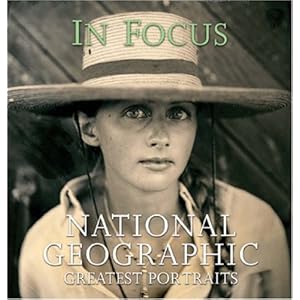
I received the following book as a late Christmas present:


It's a fairly simple premise - collect a bunch of the striking portraits National Geographic is known for and put them all together in one book. You can't tell from the cover, but this is an extensive collection of people. 504 pages of faces, all nationalities, ages, and genders.

I've been keeping it next to my computer desk, the same place I keep all my reference books.

Why?

I think in some of the writing aimed at girls there is a tendency toward homogeneous description, especially for the main characters. Sure, hair cut and color might change, eyes can be blue, green, brown, or whatever and there is usually one distinguishing characteristic to let the reader know that this character is special/different. Maybe a mole, unusual height, gap in the teeth, fluctuation in weight, etc. Kind of like this: Makeover game. As if people are just a mishmash of various characteristics.

Now, I would never try and claim that this is true for all young adult lit. No way. That would be unfair and asking for trouble.

But, I know you've probably come across it. She's pretty, but not too pretty. As if pretty, a word that can be applied to 50% (?) of the population, tells us anything. I assume the character is thin, pretty and passable unless otherwise told. Faced with the challenge of describing the girl on the cover above, would any of those words really apply?

Speaking as someone who is always experimenting with her appearance, it doesn't really matter. The things you can easily change aren't worth a damn. The things that can be easily described aren't the ones that matter. There is something else in each of our faces. The intangible something that tells you who this person is. You can see it in a photograph, if the photograph is any good. We're so much more diverse, interesting and strange than we give ourselves credit for. Normal isn't normal at all.

How do we tell that story? Well, if the writer is good, the portrait unfolds without the reader even realizing it. The rhythm when they talk, the way they think about themselves, the way they react to danger, how easily they smile, whether they'd rather run or walk, if they like making trouble, the things they find funny, whether they feel loved, how quick they are to reach for another's hand, how easily insulted, if they sway when they listen to music, are quick to pay attention, or always drifting into daydreams. Before long, you can see the character's face looking back at you.

It's something I'm struggling with as I revise. I think I might be starting to get it.


For the new year I'm going to try and keep track of the books I've finished. Here goes:

Reader log:
1. Wither - Lauren DeStefano

Currently listening:
You Never Called Me Tonight - Beth Rowley