Pages

Showing posts with label good advice. Show all posts

Thursday, August 13, 2015

Tips for the Socially Awkward Dancer


It's no picnic being socially awkward. You tend to say the wrong thing at the wrong time,  inadvertently hurt people's feelings, walk into stationary objects, have no idea when to stop (or start) talking, and get excited at inappropriate moments. It feels like you missed a day at school and, while you were gone, everyone else learned how to communicate with each other.

I started dancing so I would be cool.

Because I wasn't cool.

I saw people dancing and they seemed cool, so I figured I'd dance and be cool, too.

But you can't chase your own dorkiness away with a few hitch-kicks and a pirouette. As a matter of fact, the further your average awkward human gets into the world of dance, the more they might feel hamstrung by their social limitations. Dance is about communication. It's about collaboration. It's about moving with confidence. It's about being able to hold 1000 different conversations with your audience.

There's also an ingrained hierarchy to much of the dance world, which means you have to be able to network your butt off if you want to get ahead. Not the easiest task for the socially awkward amongst us.

Here are a few tips that have worked for me:

1. Don't take it personally.

There are all kinds of people in the world. Chances are, a lot of them aren't going to "get you". Taking it personally can cripple your progress. Brush it off, keep working on your chaine turns and find a positive mantra you can repeat to yourself. Negative thoughts are easy to dwell on. Don't get lost going down that path.

2. Find your tribe.

No matter how alone you might feel, there are others out there like you. Maybe they're in dance class. Maybe they aren't. Maybe they're online. Maybe they aren't. You might have to put some effort into those relationships, but they can be invaluable. Not just for the support and validation you get out of them, but for the support and validation you can give. Which leads us to our next tip…

3. It isn't about you.

Self-conciousness is often at the root of social awkwardness. You grow overly aware of every little thing you're doing or saying, subscribing too much weight to those moments, and allowing them to crumble beneath an artificial importance. You don't have to do this. Instead, ask a question. Ask a follow-up question. Allow yourself to think about what you're being told. (Normal people out there might laugh, but this doesn't come naturally to everyone.) If you can turn the spotlight softly onto someone else, that means you don't have to burn beneath its light.

4. Fake it till you make it, baby.

Dancers hear this a lot, but it's true. Pretend you're a bad ass and, not only might you trick a couple of people, you might also convince yourself. Keep putting yourself in challenging positions and don't let discomfort or fear stop you from giving it 100%. If dancers only danced the way they felt at any given time, we would end up with a lot of tired, hungry, cranky dances. It's the same way for conversation.

5. But don't sacrifice your authenticity.

"ARGHHHHH," you're probably saying. "How am I supposed to fake it while I make it, and be authentic at the same time?"

Beats me. I'm still working on it.

If you figure it out, let me know.

Here's the good news:

This is the best time in history to be a socially awkward dancer. Our culture is embracing nerds like never before, the internet gives us previously unheard of opportunities to connect with like-minded people and there are a million fun, wacky and weird things going on in the dance world. Being different allows you to contribute to dance in a way that is wholly unique. Eventually, if you stick around, the awkwardness that haunted you so much early on becomes a gift.

Show us the world from your point of view.


Monday, October 20, 2014

You can't have it all… but maybe you can have more than you think

Shame is such a persistent element of this modern life. Perhaps it is because we have so much constant input coming in from every angle, a million how-to books, a million blog articles offering advice, with think pieces on productivity, maturity, parenting, spirituality, career choices, nutrition, social justice, politics, and more.

They may be well-intentioned, but it can create a lingering suspicion that we're always doing it wrong. Even if we correct our behavior or opinions in response to a convincing argument, there's an opposing viewpoint one week later. It's good that we're listening, it's good that we're evaluating and challenging our own beliefs, I think it's a sign of positive change, but it's also an awful lot of noise. With time, it can become an awful lot of weight.

Or, maybe that's just me. Perhaps I'm uniquely influenced by guilt. I kept taking piano lessons for years because I thought not playing piano would make me a bad person. I feared I'd end up regretting my choices.

Many times I don't even realize guilt is influencing my behavior.

All of this leads into a book review…

I recently read "The Renaissance Soul: Life Design for People with Too Many Passions to Pick Just One". The title says it all. This is a book for people who are always finding themselves pulled in a million different directions, by a million different interests.

Our culture preaches the importance of choosing. This is especially pervasive in the dance industry. How often have dancers heard variations of the idea, "Dance requires everything"? There's a lot of talk of sacrifice and focus. Dedicating yourself completely. Not doing so makes you less of a dancer. It means you don't love it as much as the next guy.

It isn't only true for dancers. The further you get in any career or field of study, the more focused you're expected to get. I believe it discourages a lot of people. It's easy to get depressed looking at a future of doing one thing forever if that isn't ingrained into your personality.

I've learned that love doesn't always requires exclusivity. Each time I crack open a history book, sit down at the piano (yes, I eventually went back to piano), create a unique design element, or take time out to work on my novel, it isn't making me less of a dancer.

Maybe that sounds obvious and silly to you, but it was a major illumination for me. I needed permission to love a lot of things, even if permission only came from a book. I needed someone to tell me that my art wouldn't suffer if I widened my scope a little. I wanted to be set free of the guilt I didn't even know I was bearing.

The author, Lobenstine, uses the example of Leonardo da Vinci, who followed his curiosity down many different paths. The guy is credited as a painter, sculptor, architect, musician, mathematician, engineer, inventor, anatomist, geologist, cartographer, botanist, and writer. Would anyone dare to criticize him, telling him to focus his interests and dedicate himself to one field? No, because he's frickin' Leonardo da Vinci. For all the paths he took, his Mona Lisa is still one of the most celebrated paintings of all time. I'd argue his diverse interests made him a better artist than he would have been if he limited himself to one field.

That isn't to say I'm anywhere near the level of Leonardo da Vinci, but I do think I have some similar wiring in the way that I approach art. Lobenstine does a great job outlining practical strategies and plans for those with a Renaissance Soul personality type. Though I didn't fill out all the worksheets, they got me thinking in a more productive way and enabled me to create a few of my own plans.

If you think you might be a Renaissance Soul, I can't recommend this book enough. The career plans are great, but the best part is finding permission to embrace your own curiosity.

Tuesday, January 29, 2013

Crossroads

It's a potent word, isn't it? "Crossroads." Brings to mind an image of a lone man (or woman) paused at the intersection of Robert Frost's infamous two roads, trying to decide which one to follow. When I was nine years old, I had to make a decision whether to enroll in dance or synchronized swimming. As you've probably figured out, I went with dance. Sometimes I wonder how drastically different my life would have turned out if I made a different choice. Not that I regret my decision, but... it's interesting to wonder.

If you can believe it, I think that Choose Your Own Adventure books conditioned me early on to believe that decisions come in one particular flavor. Remember those books? You'd read one chapter, then, at the end of the chapter, you'd have to decide whether to a) explore the scary house in the woods or b) go home and read. Sometimes the choices were clear and obvious, with the wrong answer ending in a gruesome death scene. Other times it wasn't so easy and the only way to avoid getting disemboweled was to cheat.

These days I face many of my decisions with the same intensity that I used when reading those books. Clearly, there can only be one right answer and one wrong answer. I must follow the correct thread of fate, otherwise I'll find myself dangling from the neck above a curious crowd of onlookers. Sure, this intensity can be helpful when making big life decisions but, when making smaller decisions, such as where to eat lunch, it can be overkill.

See, that's the thing. It's easy to fall into the trap of thinking that there's always a clear right choice and a clear wrong choice. If one choice is true, than the other is false. Good and bad. As if life is a mathematical equation that we're all trying to get right.

The most effective thinkers, the ones who are able to build truly exciting lives for themselves, are the ones who are able to see beyond a) and b). Because there isn't always a choice that will kill you and a choice that will let you live. Sometimes there are eight million different choices and it isn't as much a matter of choosing between them as it is of molding a new answer for yourself.

This is why arts education is so vitally important to our society. Creating art isn't about finding one correct answer, it's about learning to build new answers in order to create a completely unique conclusion. How often do kids get to do this in a traditional school setting, as opposed to searching out, identifying and remembering one answer? The arts introduce a completely different way of learning, one that is going to be much more valuable to employers in the long run. Do you want the employee who is going to memorize and quote procedures back to you? Or, do you want the one who will build new solutions to old problems? People who can think creatively, who can make eight million tiny choices at the same time, are the ones who will push the world forward.

If you're reading this blog, you're probably an artist of some sort and the creative process is familiar to you. While writing a novel, you make hundreds of tiny decisions every moment in service of originality. If you choreograph, you probably have the ability to look at a dancer and choose between the hundreds of different movements you could give them to perform at any given time. Photographers, animators, musicians, and designers practice this style of thinking on a daily basis.

But, it isn't always easy. Sometimes it can be crippling (especially if you let yourself think too hard about all the options you're continually discarding). It doesn't come without practice. And yes, sometimes it can go horribly wrong. I don't mean to say that there aren't situations where there is definitely a wrong answer. Running with scissors is a wrong answer. Killing your spouse is a wrong answer. But it's also remarkably freeing to exit the pages of those silly Choose Your Own Adventure books and enter a world of limitless possibility.

I do an exercise with my modern dance students from time to time. One at a time, they each pick a random place in the room to stand, creating a constantly evolving formation with the other dancers in the class. There's always at least one student who freaks out.

"How do I know what to do?" they ask.

"You can do whatever you like."

"But how do I know what is right?"

Today, whatever you choose is right.

Wednesday, July 25, 2012

I Am Batman

My husband thinks it's hilarious when I assert that I am Batman. After all, I'm just a girl. I'm just a writer and a dancer - someone who makes pretty things. I don't have awesome, flying fists of fury (or do it?).

Still, I'm Batman. I have to be.

Let's go back about... 13 years. (Man, I'm old). 13 years ago there was a young, idealistic dancer who believed that she was on her way to, not only a professional dance career, but possibly lots of money, fame and fortune. Sure, money, fame and fortune are not the normal rewards of a dance career, but this dancer truly believed that she was special. She was going to be the exception.

In her first year of university, this dancer got cast in multiple "high profile" dances. In her head, this only validated her awesomeness. All her friends were so impressed! It was going to be great!

But, the rehearsal process ended up being harder than anything she'd ever undergone. Every night her body screamed, aching and seizing up horribly. She was always a little behind the other dancers, who were more experienced than she was. She couldn't seem to get anything right. Every triumph was followed by ten struggles. Every day, more rehearsals were scheduled. Three quarters of the way through the process, she injured her back. It hurt all the time, but she kept going.

She kept going because, not only did she have the ingrown sense of masochism so many dancers possess, but because she really believed in the dances she was doing. She knew they were complex and meaningful - richer than anything she'd ever been a part of. They were beautiful, and she was willing to wreck her body in order to be a part of that beauty.

But, she wasn't Batman, yet.

Eventually, performance week arrived. The young dancer gave it everything she had. She danced to the best of her ability and beyond. She probably would have given a limb, or at least a finger, for those dances. She knew that all her experience and hard work had led her to that point.

And.... everyone loved her! Her friends and family were so impressed. Finally, she'd done it! She'd lived up to her potential!

The next week, she was sitting at lunch with a few people she didn't know well. Expecting more praise, she asked them what they'd though of the show. They said it was okay for the most part, but them they started trashing her dances. Her dances. She wasn't sure whether or not they were aware that she was in those particular dances, but their comments were brutal. They were mean. They were downright evil, but, if you squinted and looked at it from a different perspective, they might have been legitimate.

It hurt. It undermined all the work, all the pain, all the strain, and even the tears. How could they? How could they casually disregard all of her effort? All her years of work to get to that point? She'd bled for their pleasure, after all!

Why dance, if she wasn't going to be respected? Why perform, if people wouldn't understand? What if she was just a sideshow, or a diversion? Wasn't she worth more than that?

But, even though she didn't always know why, she kept dancing. She kept putting herself out there, even though she knew people wouldn't always get it. She'd look like a fool sometimes. Heck, she'd be a fool sometimes.

That was the beginning. That's when I started to be Batman.

Don't bleed so that people will love you. There's not enough blood and there will never be enough people. That's not to say that you shouldn't bleed - just be a little wiser in where you spend it. People will hate you. Even worse, they'll be indifferent. And it will hurt more every time. And sometimes the hardest thing in the world is to keep going. Keep fighting.

I'm still fighting.

That's why I'm Batman. For now.

That's why all writers who keep writing, despite the growing pile of rejections, are Batman. That's why bad reviews shouldn't matter, at least, not in the break-your-spirit kind of way. There will always, always be bad reviews - some eloquently stated, others unfair. That's the cost of doing what you love. That's why you gotta be Batman. Learn what you can and move on. Write. Dance. Grow. Take the punches. Maybe you win and maybe you lose. Doesn't matter. Be Batman.

Friday, February 3, 2012

How to come up with an idea.

Sometimes it feels as if ideas are beautiful, tropical fish that can only be caught in the most rare of locations or with the most expensive of bait. Only the special people get to catch them. Everybody else has to make due with trout or carp.

When I'm feeling blocked or uninspired, I like to turn to a man with no shortage of awesome, mind-blowing, crazy ideas.

"Love is the answer to everything. It's the only reason to do anything. If you don't write stories you love, you'll never make it." - Ray Bradbury

It's true. There's a lot of pressure out there to conform to trends, but the wise people, the smart people, know that the only way to ultimately succeed is to follow your own interests and your own passions. (Of course this depends on your definition of success). Don't read that an agent is looking for middle grade mysteries and whip up a middle grade mystery if you have no interest in doing so. Write the book that is on your heart. Look to the things in your life that you are passionate about. Write about those things. Maybe it's aliens. Maybe it's love affairs. Maybe it's questions of fate vs. free will. Maybe it's cheese. Doesn't matter. Write about those things. Think about what you love and why you love it, then share.

"We are cups, constantly and quietly being filled. The trick is knowing how to tip ourselves over and let the beautiful stuff out." - Ray Bradbury

Very true, though I would add to this that sometimes we need to let the nasty stuff out as well. As a child Charlotte Bronte went to a school very much like the Lowood School described in her novel. She lost two of her sisters to tuberculosis there. Obviously it was an experience that haunted and enraged her, as she chose to include it in her book. I remember reading those chapters and feeling indignation and horror for the children there, due the vividness of the description. What are the moments in your life, the emotions, that won't let go of you? The good and the bad, the ugly and the beautiful. Write about those things! Find the truth in them. Even if you have to twist them beyond recognition, at least it's a place to start.

"You've got to jump off cliffs and build your wings on the way down." - Ray Bradbury

Don't write safe books. Don't write books that already exist. Don't coddle your characters or shy away from dangerous ground. Don't be afraid of your own ideas or feeling like a fool. Just jump.

"Quantity produces quality. If you only write a few things, you're doomed." - Ray Bradbury

I think this might be the most valid advice of all. The best way to get ideas? Write. Don't wait for the ideas to land on your shoulder or swim into your net. Chase those buggers. Chase them down! The more you write, the faster the ideas will come. Could take years. Could take hours. Just start.

Thanks, Ray. :)

Friday, November 18, 2011

What it is.

I've been doing a lot of thinking lately. Ninety-five percent of it is in regards to this weird bruise I've had on my leg for the last month that won't stop hurting. That's unusual, right? Having the same bruise for a month? I don't even remember hitting myself or running into anything. Granted, I run into things all the time (dancers are clumsy), but I think I'd remember injuring myself to this extent. Wherefore art thou, bruise? A bruise by any other name would still smell as sweet... Ack. There goes my train of thought again.

Anyhoo, the other five percent of my brain that isn't currently obsessing over weird bruises is thinking about what it means to love something. I hear about people loving things a lot in my line of work. I can't tell you how many of my students have boldly and passionately declared their love of dance. They love it so much they can barely express it. They'll never love anything else as much. All they want to do, or think about doing, is dance.

The first time I heard the spiel, I got really excited. I expected great things from these students who so passionately expressed their love of dance. I expected them to have perfect attendance. I expected them to apply critiques and grow quickly. I expected them to stand first in line, to show up on time and to perform with emotion.

But, often I was disappointed. Not always, but a lot of the time. They were late to class, or didn't show up at all. They were more interested in gossip than learning new choreography. Sometimes they quit. And, I blamed myself. They loved dance so much, but I didn't make it exciting enough for them. I didn't encourage them, or give them enough attention or feedback. Clearly, it was my fault. I destroyed their love.

Except, there were other students. Students who showed up on time, who worked hard, who didn't quit, who were willing to try something over and over again until they got it right. They didn't talk a lot, but they paid close attention to everything I said. When the studios were empty, they snuck in and started practicing on their own. Year after year, they continued to show up, even when they had other, more exciting things they could have been doing.

And I realized. Love isn't words. Love isn't emotions, or passion, or excitement, or grand proclamation. Yes, sometimes it starts there, but in the end it is something much less romantic. Much less glamorous.

Love is work.

Love is showing up, even when it's hard. It's perseverance. It's working when you're exhausted and forcing yourself to give it just one more try. And one more try after that. It exists in the absence of glory, the absence of fireworks. The absence of praise. It's a series of actions, not an emotion. It's a choice.

You can be entranced by the idea of dance, but that isn't love. The idea of writing can capture your imagination, but that isn't love. Love is the toil and the grind. The steps that get us closer to our goal. It's sitting down in your chair and opening a word document. It's the most boring, common, beautiful, rare thing I've ever seen.

So, yeah. Sorry for the cheesiness, but it's what I needed to write today. Keep being awesome.

Wednesday, September 7, 2011

How to come up with your very own high concept concept.

I'm back! (Yay?)

In the meantime - I have a theory. I believe that most high concept work can be summed up by the following process:

1. Take something that is awesome. For example: aliens. Or sharks. Or ninjas. Or ice cream. Or steampunk. Or insects. Or witches.

2. Take something else that is awesome. For example: cowboys. Or assassins. Or ballerinas. Or prisons. Or roadtrips. Or fashion. Or old people.

3. Combine these two elements.

Voila! You have a high concept concept. Maybe it's ninjas on a roadtrip. Maybe it's old people in a war against giant insects. Maybe it's witches trying to work their way into the fashion industry. Maybe it's ballerina assassins. (You can't have that one. It's mine.) Maybe it's cowboys fighting sharks... okay. You can see where I'm going with this.


Obviously Hollywood is onto this formula.

You guys have any good ideas?

Monday, August 1, 2011

How to Tell if Your Character is a Mary Sue

Oh no! You might have done it! Your MC is so interesting, so well-liked and so pretty. But, could she actually be... dun dun dun... you? Here's how to tell:
  • Is your character extraordinarily lucky? Does the perfect man show up at her place of employment and immediately fall in love with her over their shared love of cheese fries and mustard? Does a music producer overhear her singing to her little sister at the playground and offer her a contract on the spot? Does Johnny Depp fall in love with her after seeing her facebook profile? Warning... Marysuesville

  • Does she achieve her goals with little to no effort? Does she learn kung fu without breaking a sweat, then use it to incapacitate the arch villain? Does she know the exact method for hacking into a super computer, without exhibiting any of those common, pesky, nerd traits? Is she a perfect kisser on her first try? Oh, wait. What's that sign? Entering Marysuesville.

  • Is she naively unaware of her own beauty? Is she so drop dead gorgeous that everyone knows it except for her? Do you make sure that your reader is darn aware of how stunning she is? Even when she hasn't showered in a few days? Hmmmm...
*evil chuckle*
Hey, I'm not perfect. I took the Mary Sue Litmus Test and was surprised to get a much higher score than expected. Hopefully the fact that my character is so judgemental and short-tempered will save her from full residency in Marysuesville. That and all the crap I put her through. But, there might be a few aspects of my story for me to examine.
What about you? Have you ever gone about writing a perfectly normal story, just to find that creepy ole Mary Sue snuck her way in? Did you take the test and get a higher score than you thought you would? Or, am I just a bum and the rest of you awesome writers? ;) What other characteristics define a Mary Sue?

Thursday, July 7, 2011

Why You Might Want to Come Up With Your Character Names Right Away. If You Like.

I have a habit of learning things the hard way. Even if someone tells me that something's a bad idea, I still have to try it out for myself. I guess I don't always believe advice applies to me until I fail on my own. So, you can take this advice, or you can, like me, find out for yourself.

Never give your characters placeholder names. I was having a horrible time coming up with names for my characters in Mysterious Other Novel and it was getting in the way of my writing progress, so I finally just gave them silly placeholder names. Now that I'm revising, I have three inappropriately named characters whose whole personalities have been built up around the silly names that they're not allowed to keep. This is giving me many headaches. I know, whatever names I settle on will never feel like their real names. I'll always think of them and see them by their stupid, stupid placeholder names. Darn me.

So, just don't do it. Turns out it's harder to change a character's name down the road than it is to come up with a good one in the first place. Learn from my mistakes. Or don't. If you dare.

Has this ever been a problem for you? How do you know when a character's name is the right one? Are there any you've been especially proud of?

Thursday, April 7, 2011

Character Archetypes

This is something I've been playing with a lot in the Mysterious Other Novel that I'm working on right now. There's something really fascinating about studying, shuffling and perverting these different archetypal images.

A few:
  • The Child
  • The Hero (warrior, lover, or scapegoat)
  • The Anti-Hero
  • The Great Mother
  • The Witch
  • The Sage (or Wise Old Man)
  • The Trickster
  • The Fool
  • The Devil
  • The Scarecrow
  • The Mentor

There's no hard and fast list of character archetypes, but it is easy to recognize the way that the same characters show up over and over again.

Take The Book Thief, (since I just finished it):

Leisel is a Child/Hero. Plays a lot with the concept of innocence, longing for innocence and innocence destroyed.

Hans Huberman is the Mentor.

I'd argue that Rosa shifts over time from being the Witch into the Great Mother. (This is what primarily interests me. Archetypal shifts.)

Death is the Sage.

Hitler is the Devil (as he deserves).

What about Max? I'm not sure where to place him. Originally I thought Victim, but the book makes a big point of not relegating him to that status.

The truth is, we all have a collection of archetypes within us. It's not always as easy as pointing a finger and giving a name. Still, I like these labels as jumping off points, expectations to twist and explore.

What about you? When you're writing, do you find that you return to the same archetypes over and over again? I tend to have a Mentor in most of my work and Sages poke their dirty heads in from time to time. Moosh is a bit atypical for me, in that it embraces most of the negative archetypes and manages to turn the one potential positive into a negative. That's just my warped sense of humor, I guess.

Is this something you think about when you're writing, or merely a facet you discover after the project is done? Do you have a favorite archetype in fiction or film?

Reader's log:
32. Paper Towns - John Green

Monday, January 3, 2011

So Many Faces

I was going to create my 2010 film wrap-up, but, because my mind is a vast wasteland where information enters and quickly disappears, I don't remember what movies I've seen in 2010. For this I depend on my husband, who charts most incidents of life. Unfortunately, he is busily working and slow to send me the data. So, rather than wait for him, I'm going to write about something else.

Character.

Much has been said on the subject. Much will be said on the subject. But, here's the thoughts I've been tossing around lately.

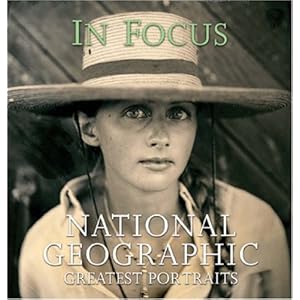
I received the following book as a late Christmas present:


It's a fairly simple premise - collect a bunch of the striking portraits National Geographic is known for and put them all together in one book. You can't tell from the cover, but this is an extensive collection of people. 504 pages of faces, all nationalities, ages, and genders.

I've been keeping it next to my computer desk, the same place I keep all my reference books.

Why?

I think in some of the writing aimed at girls there is a tendency toward homogeneous description, especially for the main characters. Sure, hair cut and color might change, eyes can be blue, green, brown, or whatever and there is usually one distinguishing characteristic to let the reader know that this character is special/different. Maybe a mole, unusual height, gap in the teeth, fluctuation in weight, etc. Kind of like this: Makeover game. As if people are just a mishmash of various characteristics.

Now, I would never try and claim that this is true for all young adult lit. No way. That would be unfair and asking for trouble.

But, I know you've probably come across it. She's pretty, but not too pretty. As if pretty, a word that can be applied to 50% (?) of the population, tells us anything. I assume the character is thin, pretty and passable unless otherwise told. Faced with the challenge of describing the girl on the cover above, would any of those words really apply?

Speaking as someone who is always experimenting with her appearance, it doesn't really matter. The things you can easily change aren't worth a damn. The things that can be easily described aren't the ones that matter. There is something else in each of our faces. The intangible something that tells you who this person is. You can see it in a photograph, if the photograph is any good. We're so much more diverse, interesting and strange than we give ourselves credit for. Normal isn't normal at all.

How do we tell that story? Well, if the writer is good, the portrait unfolds without the reader even realizing it. The rhythm when they talk, the way they think about themselves, the way they react to danger, how easily they smile, whether they'd rather run or walk, if they like making trouble, the things they find funny, whether they feel loved, how quick they are to reach for another's hand, how easily insulted, if they sway when they listen to music, are quick to pay attention, or always drifting into daydreams. Before long, you can see the character's face looking back at you.

It's something I'm struggling with as I revise. I think I might be starting to get it.


For the new year I'm going to try and keep track of the books I've finished. Here goes:

Reader log:
1. Wither - Lauren DeStefano

Currently listening:
You Never Called Me Tonight - Beth Rowley